
5 min read
How UWB is already enabling the real-time sensing, localization, and edge intelligence capabilities future 6G systems will depend on.
Introduction
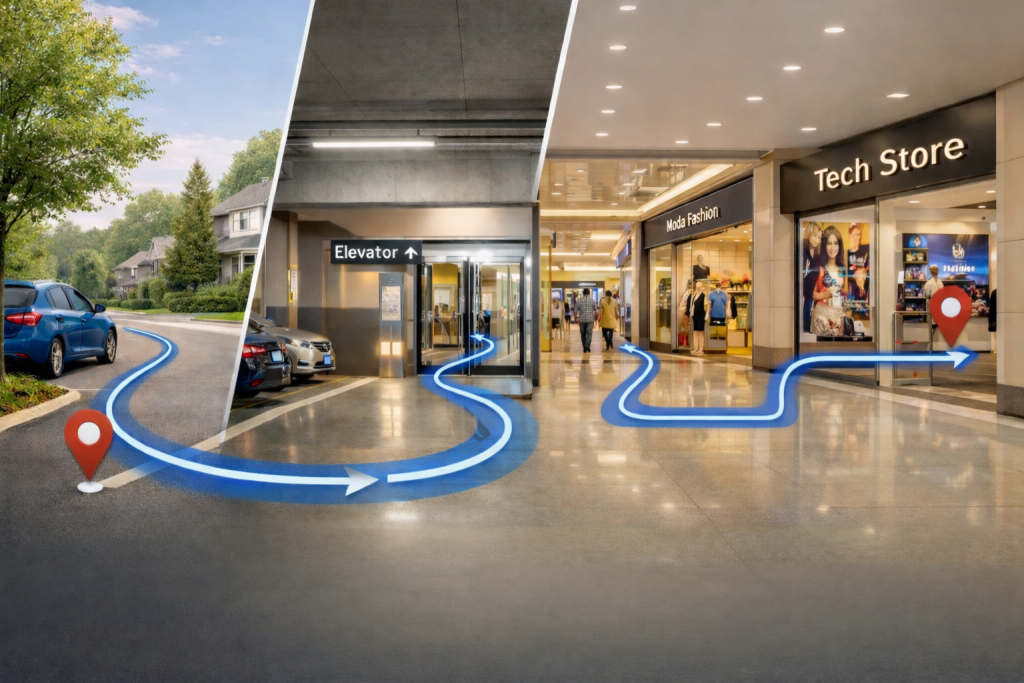
Wireless networks are evolving beyond connectivity. As 6G architectures begin to take shape, the industry is moving toward systems that can understand motion, proximity, occupancy, and environmental context in real time.
This shift is driving interest in Integrated Sensing and Communication (ISAC), a concept that combines wireless communication with localization and sensing capabilities inside the same infrastructure.
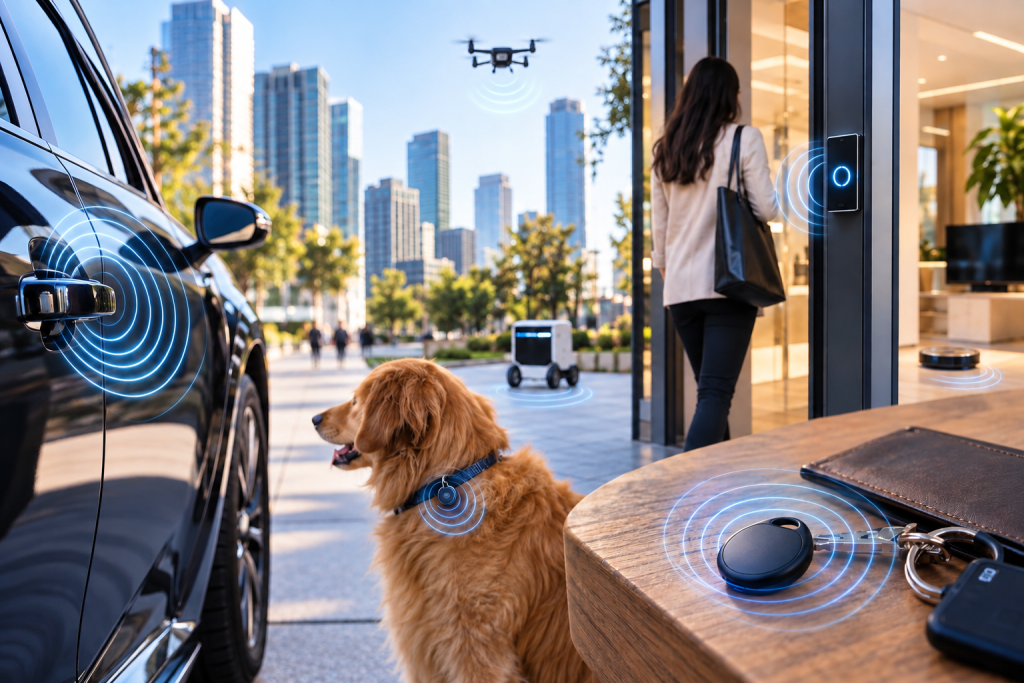
While much of the 6G ISAC conversation is still focused on future cellular architectures, Ultra-Wideband (UWB) is already delivering many of these capabilities today. From automotive digital keys to industrial automation and secure access systems, UWB has become one of the first commercially deployed spatial sensing technologies operating at scale.
For companies building intelligent edge systems, that matters now, not five years from now.
Ecosystem Momentum Is Accelerating UWB Adoption
One of the clearest indicators of UWB’s long-term importance is the level of ecosystem alignment forming around it.
Organizations including the FiRa Consortium, the Car Connectivity Consortium (CCC), and CSA Aliro are helping standardize interoperability, secure ranging, and trusted proximity services across devices and infrastructure.
FiRa is leading interoperability and certification efforts for UWB-enabled products, helping ensure consistent behavior across smartphones, wearables, infrastructure, and consumer devices. In parallel, FiRa is working closely with its members and industry organizations to expand the UWB ecosystem and accelerate the development of new use cases across automotive, industrial, consumer, and smart access applications.
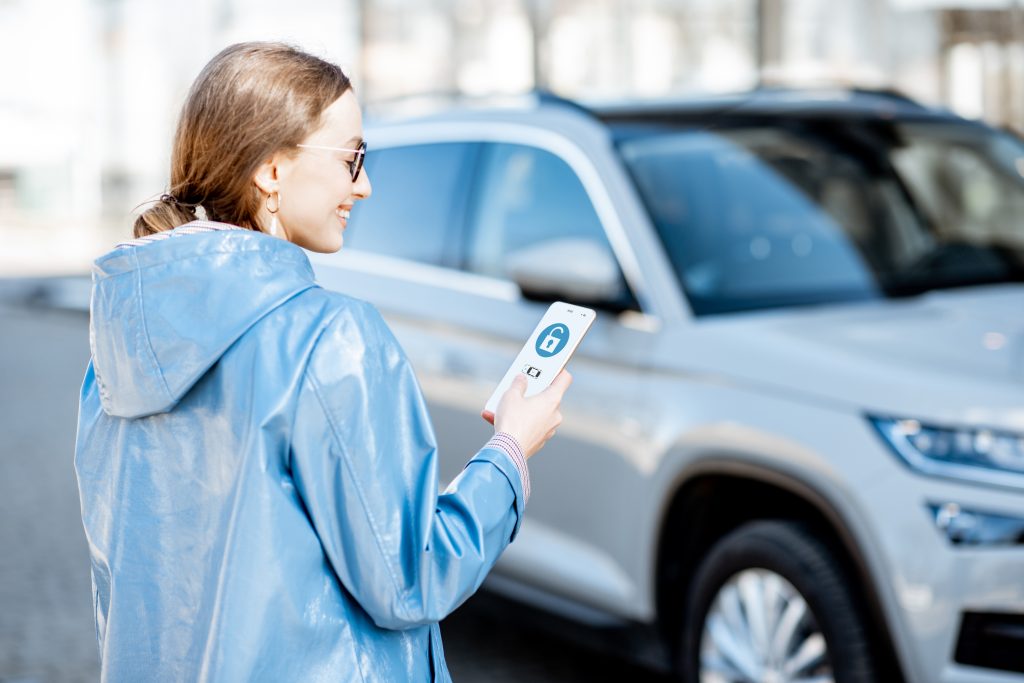
At the same time, CCC Digital Key standards are accelerating automotive adoption by enabling secure smartphone-based vehicle access using precise ranging capabilities.
Aliro is extending this momentum into enterprise and smart access environments by creating interoperable frameworks for mobile credentials and secure authentication.
Together, these ecosystems are helping establish spatial awareness as a core wireless capability rather than a standalone feature.

Why UWB Is Already Ahead
Unlike many proposed 6G sensing technologies that remain in research phases, UWB is already deployed in real-world systems.
UWB operates using extremely short pulses transmitted across very wide bandwidths, typically around 500 MHz. That wide bandwidth enables highly accurate time resolution and strong resistance to multipath interference, particularly in complex indoor environments.
Modern UWB systems support advanced techniques including:
- Two-Way Ranging (TWR)
- Time Difference of Arrival (TDoA)
- Angle of Arrival (AoA)
These capabilities allow UWB to deliver centimeter-level ranging accuracy with low latency and strong reliability.
One reason UWB has gained traction faster than many earlier indoor positioning technologies is that it solves a practical engineering problem: reliability in complex real-world environments. High theoretical accuracy is not enough if performance collapses in dense indoor spaces, industrial environments, or multi-device deployments. UWB’s resilience to multipath interference is one of the reasons it has moved from niche deployments into mainstream consumer and automotive platforms.
IEEE 802.15.4ab further improves performance under Non-Line-of-Sight (NLoS) conditions, making UWB increasingly attractive for smart factories, logistics, robotics, and dense urban deployments where traditional positioning technologies struggle.
Edge AI Needs Local, Real-Time Sensing
One of the biggest architectural shifts happening across wireless infrastructure is the move toward edge intelligence.
Sensing and AI workloads are already moving closer to the edge where data is generated rather than relying entirely on centralized cloud infrastructure. The reasons are practical: lower latency, reduced backhaul traffic, improved privacy, and faster autonomous decision-making.
UWB fits well into edge architectures because most of its sensing and ranging decisions already happen locally.
In industrial environments, UWB anchors and tags can track robotics and autonomous systems with centimeter-level precision while edge AI engines analyze movement and operational patterns in real time.
Inside vehicles, UWB supports secure digital keys, occupancy sensing, and child presence detection without requiring constant cloud connectivity.
As edge AI adoption grows, local spatial awareness will become increasingly important, especially in systems where latency and reliability directly affect safety or operational efficiency.
Power Efficiency Will Matter More in 6G Systems
Persistent sensing only works if power consumption remains manageable.
That is one of UWB’s major advantages. Its short-pulse, low-duty-cycle architecture is inherently optimized for battery-powered devices and always-on sensing scenarios.
Compared with many cellular-based sensing approaches, UWB can often deliver lower processing overhead and improved energy efficiency for localized sensing applications.
In many edge applications, power efficiency matters more than absolute sensing range or peak throughput. A wearable, industrial sensor, or smart lock may need to operate continuously for months or years on limited battery capacity. That changes the design priorities significantly and favors sensing technologies that can deliver persistent spatial awareness without adding major processing or power overhead.
This makes it especially well suited for:
- Wearables
- Smart home devices
- Healthcare monitoring
- Industrial IoT sensors
- Mobile accessories
As sensing becomes a standard feature across connected devices, low-power spatial awareness will become a critical design requirement.
Trusted Localization Is Becoming Part of the Security Model
As wireless systems become more context-aware, security is evolving beyond identity verification alone.
Future systems will increasingly need to verify location and proximity as part of the trust model itself.
This is an important shift in how wireless security is evolving. In many emerging applications, identity alone is no longer sufficient. Systems increasingly need to confirm where a device is located and whether it is physically present within a trusted range. That requirement is becoming especially important in automotive access, secure infrastructure, and industrial automation environments.
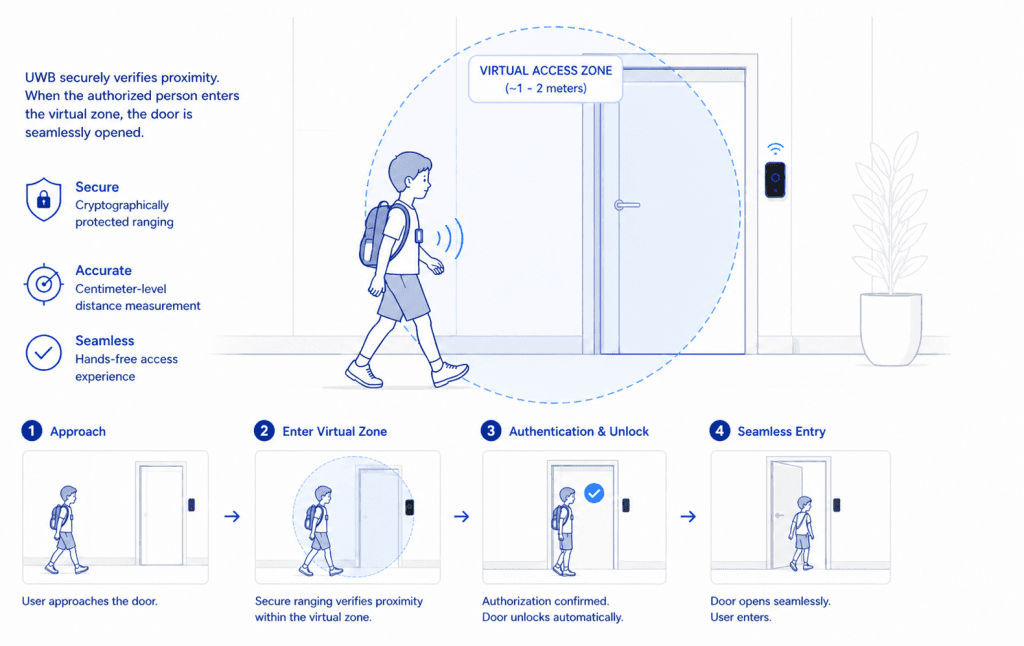
Figure 1 – Secured access example
Standards including IEEE 802.15.4z and IEEE 802.15.4ab introduced secure ranging mechanisms designed to mitigate relay attacks and distance spoofing. These protections are becoming essential for applications such as:
- Automotive digital keys
- Enterprise access systems
- Smart locks
- Industrial automation
- Secure infrastructure
Ecosystem organizations such as FiRa, CCC, and CSA-Aliro are helping operationalize these capabilities through interoperable implementations across devices and infrastructure.
In practice, trusted localization is becoming a foundational requirement for secure spatial computing.
The Future Will Be Sensor Fusion and Multi-Modal
No single sensing technology is likely to dominate every 6G deployment scenario. Different environments will require different combinations of range, accuracy, latency, power efficiency, and environmental awareness.
Future intelligent environments will rely on sensor fusion architectures that combine multiple sensing technologies, including:
- UWB
- Cellular ISAC
- Radar
- LiDAR
- Cameras
- Inertial Sensors
In these systems, cellular ISAC may provide broad environmental awareness while UWB delivers highly accurate local sensing and trusted ranging.
Edge AI engines will increasingly fuse information from multiple sensor types to build dynamic real-time understanding of motion, occupancy, proximity, and environmental context.
The industry is clearly moving toward systems where sensing, localization, and AI operate together rather than as separate layers.
Conclusion
The next generation of wireless systems will not be defined by connectivity alone.
They will be defined by how effectively they understand the physical world around them.
UWB is already proving that precise, low-power, secure spatial awareness can operate at commercial scale today. At the same time, 6G ISAC research is pushing wireless infrastructure toward increasingly intelligent sensing-aware architectures.
For teams building intelligent edge systems, the opportunity is clear: combine connectivity with trusted sensing, localized AI processing, and real-time spatial awareness.
In many ways, UWB is giving the industry an early look at what sensing-aware wireless systems will eventually become.

Navot Goren